|
The Most Related Parasites in the World: What 17,565 Genomes Reveal About Falciparum Malaria in South America
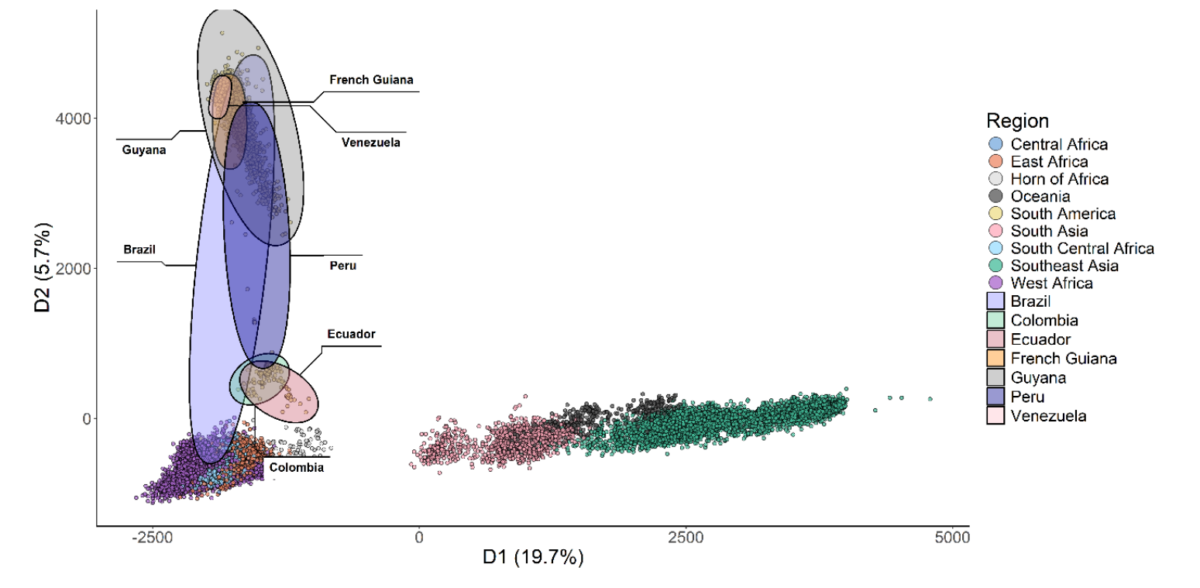
A new study in Nature Communications compared 17,565 Plasmodium falciparum genomes from 39 countries — the largest analysis of its kind — and found that the most closely related parasites on the planet are circulating in South America. Infections in the region are overwhelmingly monoclonal, and isolates share far more of their genome through recent common ancestry than anywhere else in the world. This is the genomic signature of low transmission: when few people carry the parasite, lineages rarely meet and recombine. A region approaching elimination should look like this.
But the same analysis revealed a region that is also unusually fragmented. Genetic differentiation between South American countries was far higher than between countries in any other region, with Colombia and Ecuador forming one genetic cluster and Peru, French Guiana, Guyana and Venezuela another. Parasites are not moving freely across the continent, and what holds in one country cannot be assumed to hold next door. The Americas do not have one malaria problem; they have several, each with its own evolutionary history.
Those separate histories have left marks that global surveillance panels can miss. South America carried the highest proportion of genotypes with markers of resistance to chloroquine, pyrimethamine and sulfadoxine (69.5%), along with pfcrt and pfmdr1 variants found nowhere else in the dataset. A validated marker of partial artemisinin resistance was detected in a single isolate from Guyana, and elevated relatedness around two genes of the Kelch13 pathway led the authors to suggest a possible alternative route to artemisinin resistance — distinct from the one that emerged in Southeast Asia. They also caution that uneven sample sizes across the region call for careful interpretation.
Why does it matter?
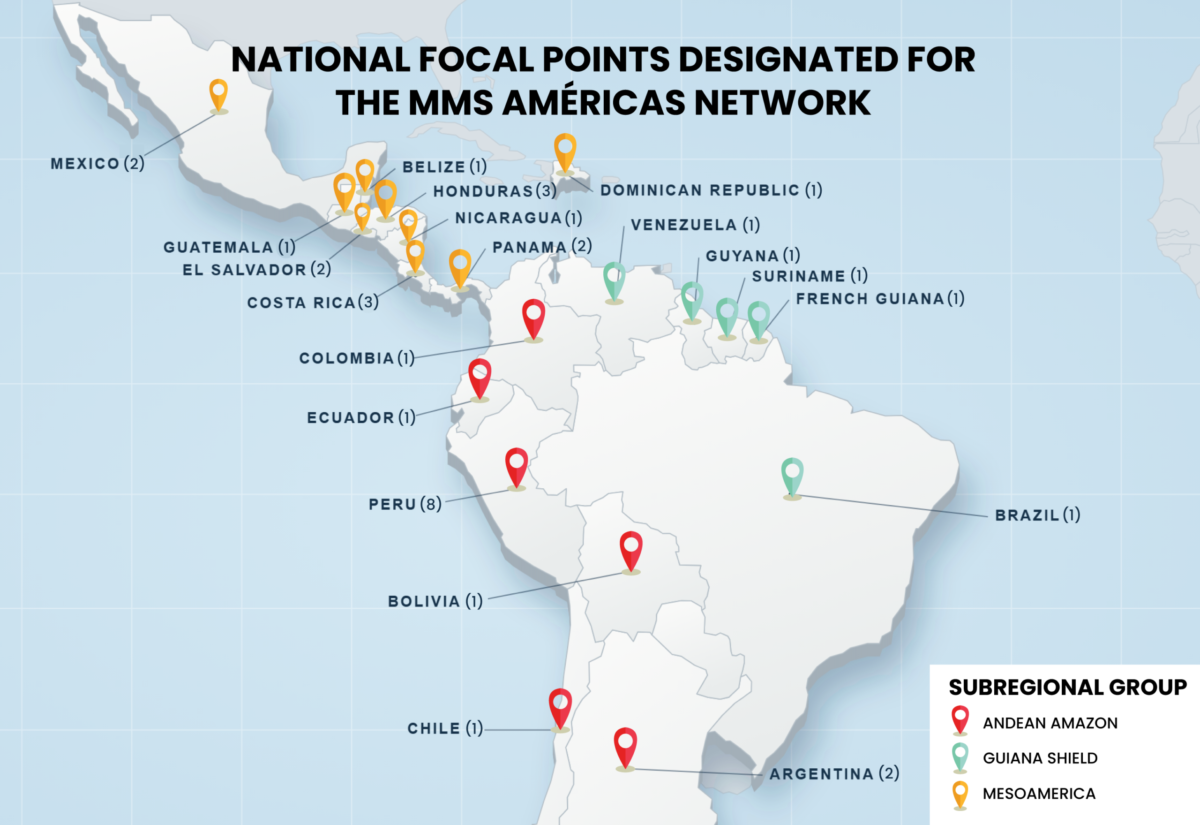
Genomic surveillance only sees what it is sampled. South America harbors resistance markers and genetic backgrounds found nowhere else, and they differ sharply between neighboring countries — yet the region contributed 8.9% of the genomes analyzed, and several endemic countries of the region are not represented in the dataset at all. Regional data cannot be replaced by global averages. Sustained, standardized and geographically representative sampling is what will let the Americas detect emerging resistance early enough to act, and distinguish a parasite population in retreat from one that is quietly adapting.
Reference
Billows, N., Dombrowski, J.G., Thorpe, J. et al. Global-scale population genetic analysis of Plasmodium falciparum identifies region-specific patterns of malaria parasite adaptation. Nature Communications 17, 6318 (2026). https://doi.org/10.1038/s41467-026-73006-2
|