|
Generating scientific evidence that allows malaria programs to use this information to design strategies or make decisions is crucial. It is easy to say, and it would seem easy to do: the evidence is published in scientific articles; they just need to be read and incorporated into manuals or guidelines. But unfortunately, it's not that simple. It's not enough to put it in writing; it must be implemented, and that's the hardest part.
On the one hand, we have researchers with very interesting and relevant results, but using highly technical language that's not easily understood by malaria program's managers. On the other hand, we have the National Malaria Control Programs (NMCP) overwhelmed by responding to day-to-day issues or emergencies that sometimes arise, and they don't have the time to carefully read, understand, and translate into concrete actions the scientific information published every day |
| |
|
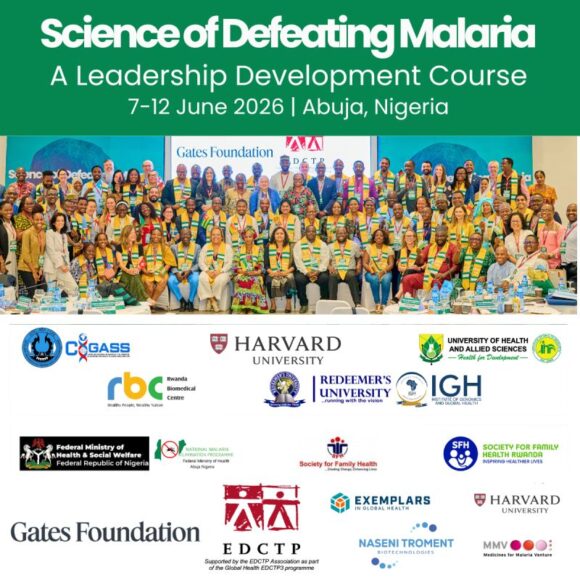
During this course, it was interesting to hear both points of view. Both sides know that it's important to include molecular surveillance (and other innovations generated by researchers) as part of NMCP activities; but we must find a middle ground. On the one hand, researchers must learn to present scientific evidence in a simple, easy-to-understand format, with a clear justification of why and how it should be incorporated into programs. On the other hand, malaria program's managers and other authorities must be willing to listen to and use this evidence; in other words, there must be political will. |
|
|
|
|
| |
|
Concrete examples were presented of researchers working hand in hand with malaria programs, implementing molecular surveillance and using this information to take concrete actions. Senegal is already using Malaria Molecular Surveillance (MMS) and Treatment Efficacy Studies data into the NMCP to make decisions in real time, this was possible thanks to a program led by Cheikh Anta Diop University (UCAD) and funded by Gates Foundation. More recently, The Rwanda Biomedical Centre, also in partnership with Gates Foundation, recently launched a program with the purpose to build national capacity for malaria molecular surveillance to improve diagnosis and treatment for populations at risk. |
| |
|
In addition to the collaboration between researchers and NMCPs at the national level, collaborative networks between different countries in the region were also presented, which allows for the optimization of time and resources. One recent initiative is the MMS in the Américas that, following the example of existing networks in other regions, will facilitate knowledge exchange, strengthen local capacity, promote coordinated responses, and ensure that evidence from molecular surveillance will be integrated into routine decision-making and translated into measurable health. It is a long way, it is not going to be easy; but with the commitment of researchers and NMCPs it is possible.
Leadership and political will are key to achieving our ultimate goal: eliminating malaria.
Dionicia Gamboa |
| |
|
Making genomic surveillance practical: New tools for tracking Plasmodium vivax in the Americas |
|
Genomic surveillance is becoming an increasingly important tool for malaria elimination. By analyzing the genetic makeup of malaria parasites, researchers can identify transmission patterns, distinguish imported infections from local cases, and monitor the emergence of drug resistance.
A recent study published in PLOS Neglected Tropical Diseases introduced two new targeted sequencing panels for Plasmodium vivax: PvGTSeq and PvCRiSP. These tools were developed through a regional collaboration involving researchers and public health institutions across the Americas.
PvGTSeq provides detailed information on parasite populations, genetic relatedness, and drug resistance markers, while PvCRiSP offers a simplified and cost-effective approach for estimating infection complexity and identifying transmission links. Both tools can generate reliable results from samples with low parasite densities, making them suitable for use in routine surveillance.
Why does this matter?
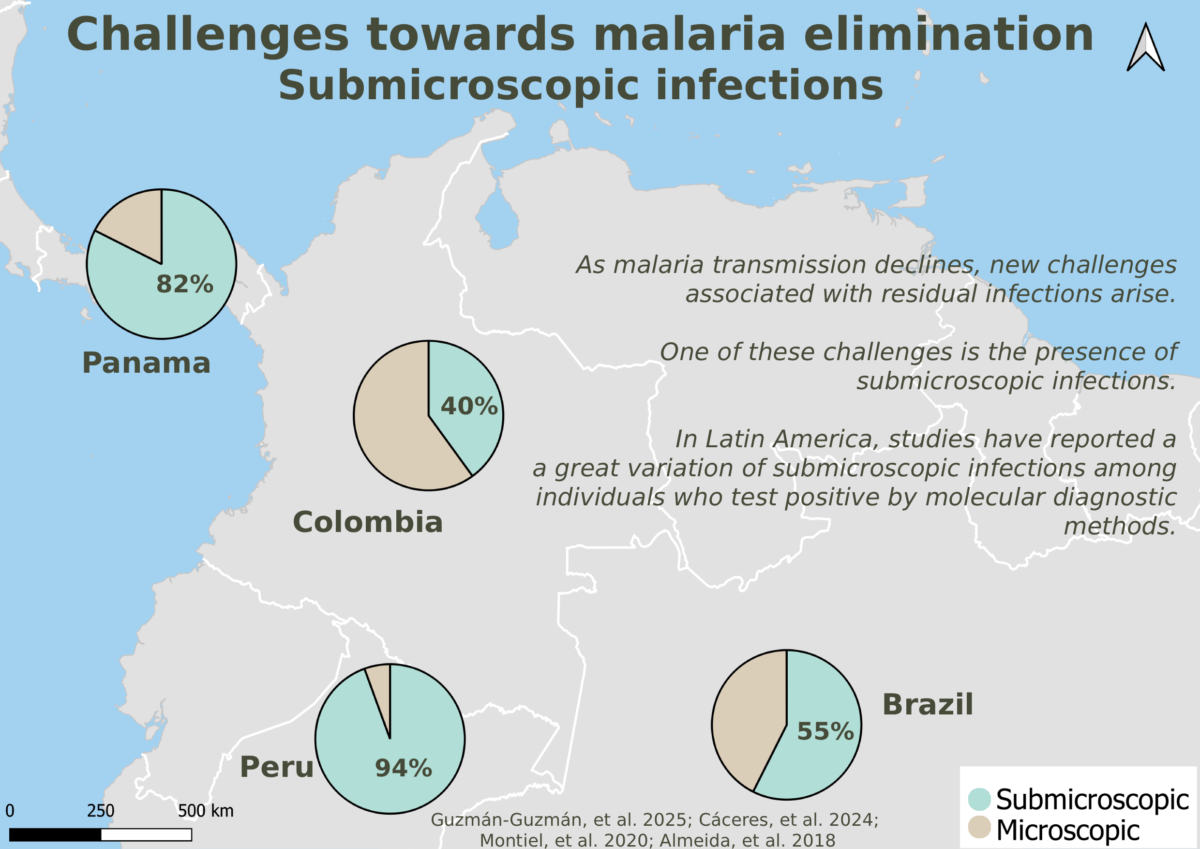
As malaria transmission declines, imported infections and cross-border transmission become increasingly important challenges. Genetic tools can help determine where infections originate and reveal connections between transmission areas that may not be detected through conventional surveillance alone.
Key message
By making genomic surveillance more accessible and scalable, PvGTSeq and PvCRiSP provide new opportunities for malaria programs to generate actionable data and strengthen elimination efforts across the Americas. |
|
|
| |
|
Genomic Surveillance for Malaria Control: Opportunities and Challenges |
|
Genomic surveillance uses parasite DNA to understand how malaria spreads within and between populations. By comparing genetic markers among parasites, it is possible to identify related infections, characterize parasite populations, and track transmission patterns that are difficult to detect through routine surveillance alone.
Genomic surveillance can help distinguish imported cases from local transmission, identify transmission hotspots, monitor the emergence and spread of antimalarial drug resistance, and evaluate the impact of control interventions. These applications are particularly valuable in settings approaching malaria elimination, where understanding the origin of infections becomes increasingly important.
Recent advances in targeted sequencing have made genomic surveillance more accessible for malaria programs. For example, the newly developed PvGTSeq and PvCRiSP panels allow researchers to analyze Plasmodium vivax populations using a reduced set of highly informative genetic markers. These tools can be used to investigate transmission links, estimate relatedness between infections, and support surveillance activities in countries across the Americas.
The successful implementation of genomic surveillance still depends on laboratory capacity, bioinformatics expertise, standardized protocols, and sustainable funding. In addition, genetic data are most informative when combined with epidemiological, demographic, and geographic information.
Genomic surveillance is becoming increasingly practical and can provide valuable information that complements routine surveillance. As costs decrease and analytical tools improve, integrating genetic data into malaria surveillance systems may help programs make more informed decisions and accelerate progress toward elimination. |
|
|
| |
|
Escalante AA, Forero-Peña DA, Adhin MR, Fontecha G, Gamboa D, et al. MMS Américas: A regional network for malaria molecular surveillance. Am J Trop Med Hyg. 2025.
Jacob CG, Thuy-Nhien N, Mayxay M, et al. Genetic surveillance in the Greater Mekong Subregion and South Asia to support malaria control and elimination. eLife. 2021;10:e62997.
World Health Organization. Malaria Surveillance, Monitoring & Evaluation: A Reference Manual. Geneva: WHO; 2024 |
| |
|
From Genetic Data to Better Public Health Decisions |
|
Strengthening capacities in malaria genetics and molecular surveillance is essential for enabling Latin America to move toward a more precise, timely, and evidence-based response. In a region where malaria persists across diverse epidemiological settings, having professionals capable of interpreting genetic data makes it possible to better understand transmission dynamics, distinguish imported cases from local transmission, monitor drug resistance, and detect diagnostic threats. This course seeks to address a specific need: translating complex genomic tools into practical knowledge that can be applied by researchers, laboratories, and public health programs. We hope it will contribute to building a regional community with shared standards, capable of generating, interpreting, and using molecular data to inform decision-making and strengthen malaria elimination efforts.
Gustavo Fontecha |
|
|
| |
|
RECENT AND UPCOMING EVENTS
|
| |
|
Technical Consultation on the role of genomics in malaria surveillance, control, and decision making
|
| |
|
Hybrid meeting, WHO, Geneva, Switzerland 22-24 June 2026 |
| |
|
Technical Consultation to review the existing evidence from genetic epidemiological research studies in the development of future policies and the potential for malaria programmes to make practical use of genomics. |
| |
|
Additional workshops, webinars, and training opportunities are available on the MMS Americas website workshops section.
|
| |
|
mmsamericas.network@gmail.com |
| |
|
Building regional collaboration for malaria molecular surveillance across the Americas. |
| |
|
“Were you forwarded this email? You can subscribe to directly receive this in your inbox.” |
| |
|