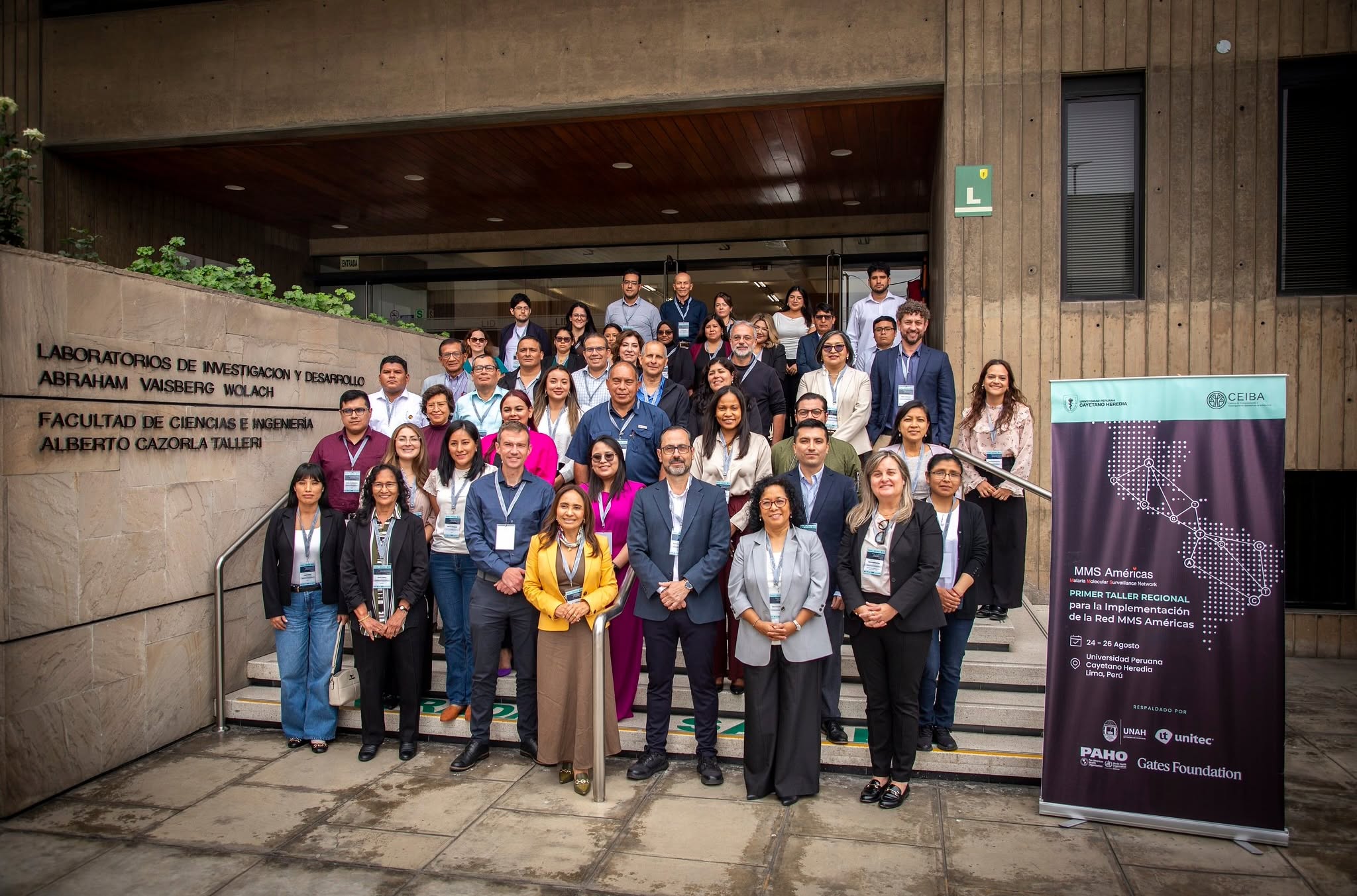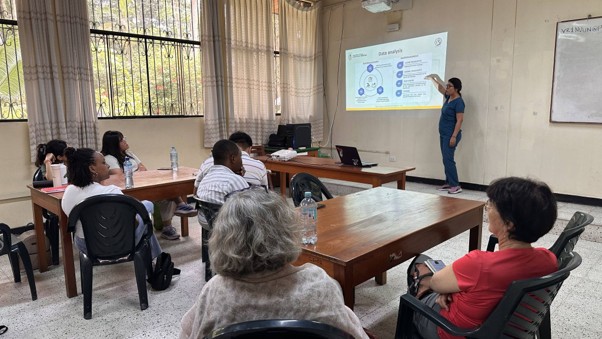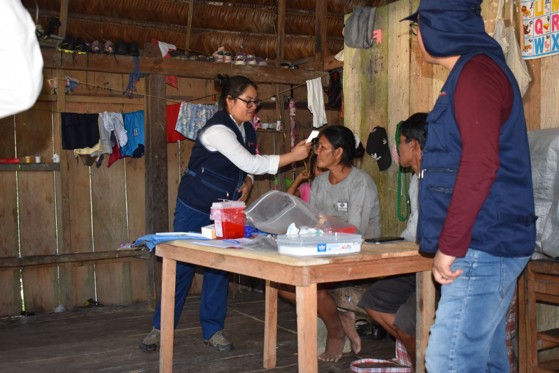
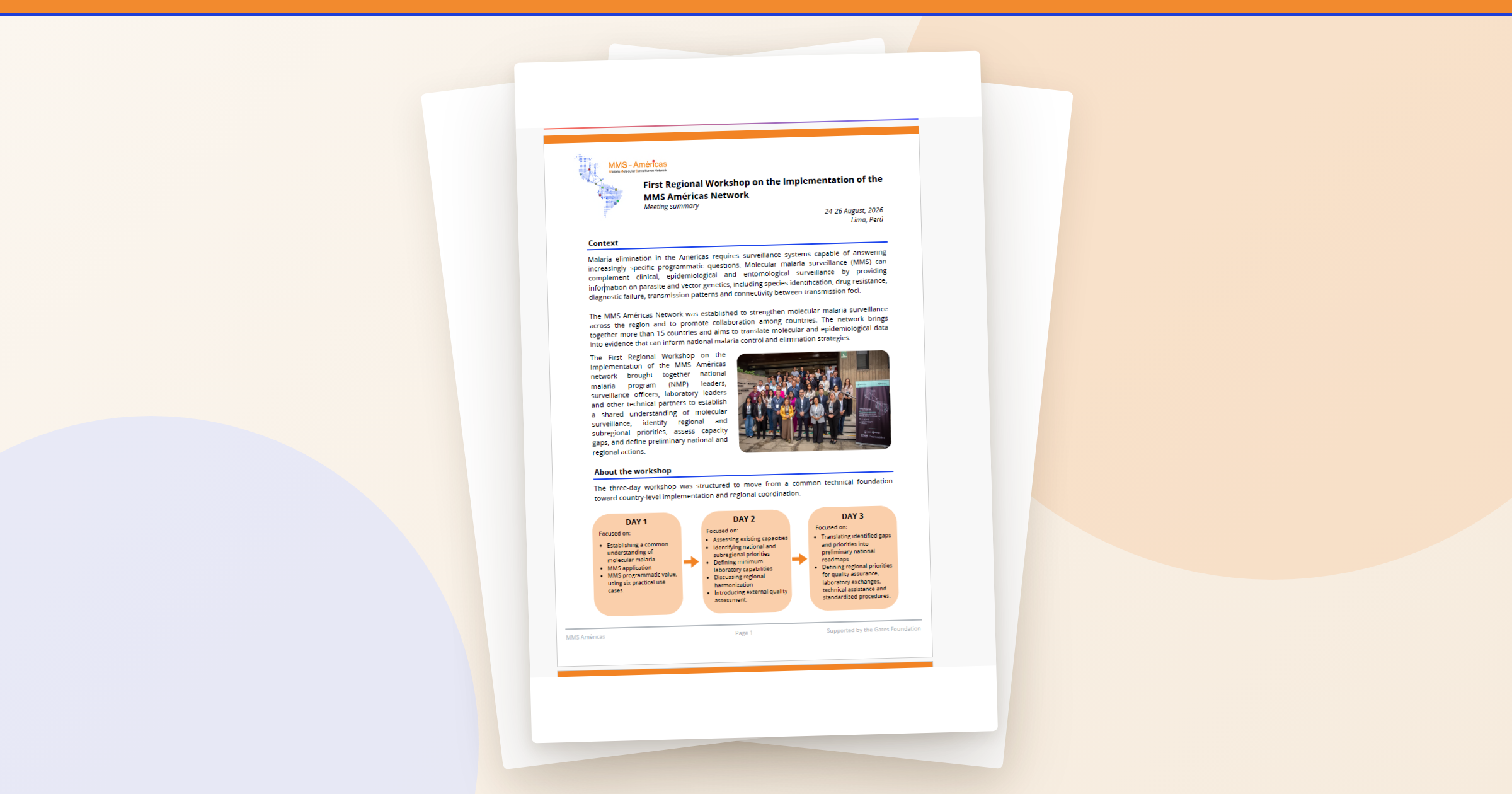
The summary document of the First Regional Workshop on the Implementation of the MMS Américas Network, held in Lima from August 24 to 26, 2026, is now available. It compiles the technical discussions, the results of the regional capacity assessment and the agreements reached by participating countries.
The workshop brought together national malaria program leaders, surveillance officers, laboratory heads and technical partners to build a shared understanding of molecular surveillance, identify regional and subregional priorities, assess capacity gaps and define preliminary actions.
The summary describes six use cases discussed during the workshop, from diagnostic test failure associated with pfhrp2/pfhrp3 deletions to antimalarial drug resistance, local transmission and importation, and connectivity between transmission foci.
It also presents the results of the regional capacity assessment, in which sixteen countries took part in the malaria component and fourteen in the vector component. The region shows relatively strong basic laboratory infrastructure, while bioinformatics, quality assurance, access to reagents and sustained financing remain the main constraints. One of the workshop’s main conclusions is that no single country holds every capacity that comprehensive molecular surveillance requires, but that those capacities already exist across the region and can be connected.
Based on the national roadmaps drafted by each delegation, participants identified three immediate areas for regional action: (1) expanding laboratory participation in the WHO Malaria NAAT EQA scheme, (2) facilitating laboratory exchanges and technical assistance, and (3) developing harmonized SOPs and technical guidance. The document sets out implementation horizons of up to 24 months, beginning with priority SOPs and capacity-building activities.
The summary also includes the subregional priorities for Mesoamerica and the Caribbean, the Andean Amazon and the Guianan Amazon, a framework of minimum laboratory capacities and the full workshop agenda.