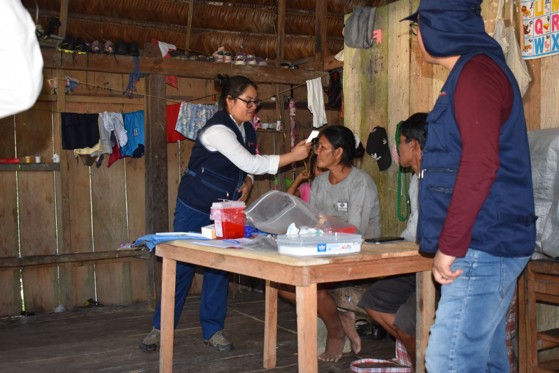

When people think about malaria, they often imagine a patient with fever, chills, and severe symptoms. But malaria can also spread silently. Some infected individuals carry the parasite without feeling sick, creating what scientists call asymptomatic infections. Because these infections usually go unnoticed and untreated, they can continue contributing to malaria transmission within communities.
This hidden transmission is becoming increasingly important in low-transmission settings across the Amazon Basin and other regions approaching elimination goals. Recent studies from the Brazilian and Ecuadorian Amazon have shown that many Plasmodium vivax infections occur with very small amounts of parasites in the blood, making them difficult to detect with conventional diagnostic methods such as microscopy or rapid tests. In other words, official case numbers may not always reflect the true circulation of malaria parasites.
At the same time, scientists are discovering that the mosquitoes transmitting malaria are also more complex than previously thought. A recent large-scale genomics study published in Science analyzed more than 1,000 genomes of Anopheles darlingi, the principal malaria mosquito in South America. Researchers found important genetic differences between mosquito populations across the continent, including signs that some populations may be adapting to insecticides used for vector control. Together, these studies highlight an important challenge for malaria elimination in the Americas: not all infections are visible, and mosquito populations are constantly changing. Eliminating malaria will require more than reducing symptomatic cases. It will also depend on strengthening regional collaboration, improving surveillance systems, and using molecular tools to better understand how parasites and mosquitoes circulate across the region.
Sources: